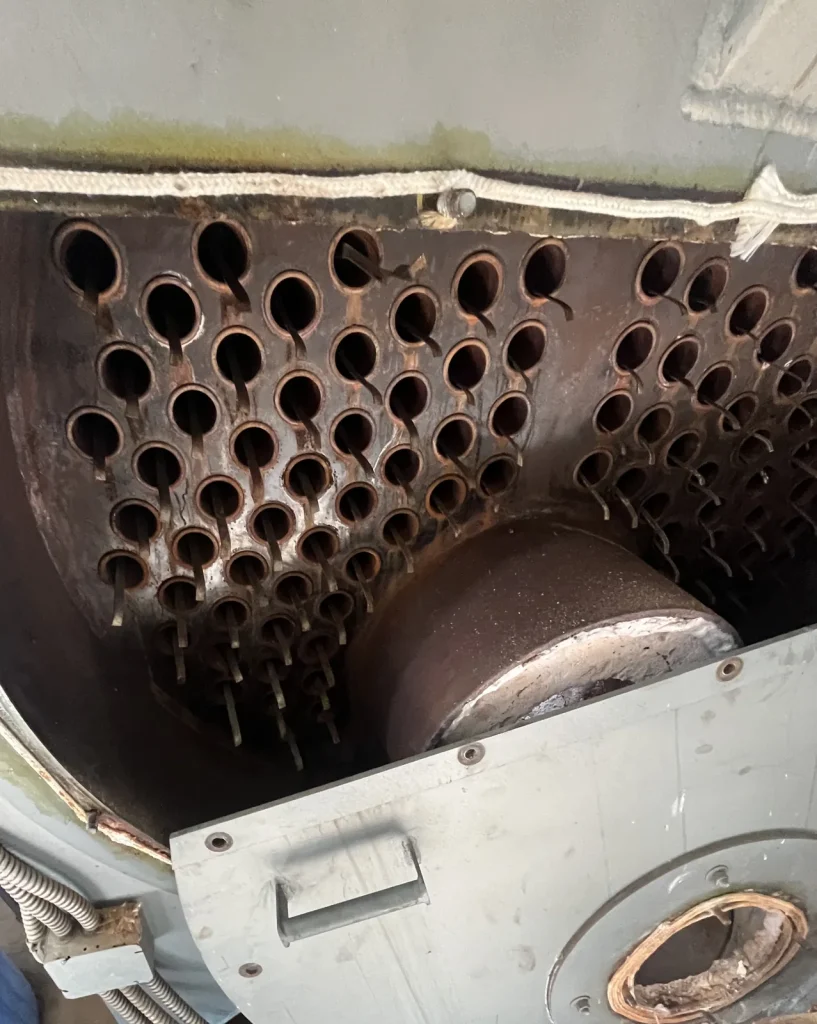
An industrial boiler’s life is shortened by a short list of causes: scale and oxygen attack on the waterside, thermal stress from short cycling and fast warm-ups, low water events, and small leaks left alone. Four habits protect industrial boiler lifespan against all of them: treat the water, share the run hours, watch the data, and inspect on time. McKenna Boiler Works, Inc. builds, inspects, and repairs industrial boilers in California, and a well-maintained boiler can run for decades.

1. How does water treatment protect the boiler?
Many pressure-part failures start on the waterside. Two mechanisms do most of the damage:
- Scale. Hardness minerals in makeup water deposit on the hottest surfaces. Scale insulates the steel, so heat that should pass into the water stays in the metal. The tube or furnace runs hotter, and in severe cases it overheats, bulges, or fails. Stack temperature also rises, because less heat is absorbed.
- Oxygen pitting. Dissolved oxygen in feedwater attacks steel in small, deep pits, often in the feedwater line, the boiler shell near the feedwater inlet, and the tubes. Pits can go through a tube wall while the rest of the tube looks fine.
Protection is continuous. A softener removes hardness, a heated feedwater system drives off much of the dissolved oxygen, a chemical program controls the remaining oxygen, alkalinity, and pH, and blowdown removes the solids that concentrate as water boils off. Returned condensate cuts the makeup water load.
Your water treatment company sets the chemical program and blowdown schedule, and it should be on site during inspections to check and monitor the water side. McKenna takes care of the boiler side: the pressure parts, burner, and controls.
2. Why rotate the lead boiler and avoid thermal stress?
In a plant with two or more boilers, the lead boiler carries most of the run hours. Rotating the lead, weekly or monthly or by run hours, spreads the wear so one boiler does not wear out while another sits.
How a boiler runs matters as much as how long. Every time a burner starts, the furnace is purged with cool air and then heated again. Many starts per hour, from an oversized boiler or narrow control settings, put repeated thermal cycles on tube-to-tubesheet joints and refractory. Fast warm-ups from cold do the same on a larger scale: the furnace and tubes heat faster than the shell, and the difference in expansion loads the rolled tube joints and tubesheet ligaments, which leads to leaks and cracks. Warm up at the rate the manufacturer gives.
A standby boiler also needs care. Lay it up wet or dry as your water treatment company recommends, because an idle boiler left half full of untreated water corrodes quickly. Lead-lag sequencing and setpoint changes are part of a controls upgrade.
3. What should you monitor?
Modern burner controls and monitoring systems log the numbers that show trouble early. Compare readings at the same firing rate over time:
- Stack temperature rising: soot or scale.
- Flue gas O2 drifting: fuel-air ratio changing, time for a tune.
- Burner starts per hour climbing: short cycling.
- Makeup water rising: leaks, failed traps, or lost condensate, all of which bring more hardness and oxygen in.
- Low water cutoff trips and lockouts: every one is investigated, never just reset.
A hand-written log works if it is kept the same way every shift. Remote monitoring automates the logging and sends alarms; it watches the data, and the safety limits stay local and hard-wired.
4. Why do inspections and early repairs extend boiler life?
Have the boiler opened and inspected once a year. An internal inspection finds scale, pitting, and cracking while they are small. In California, power boilers (steam above 15 psig) are inspected internally and externally at least once a year under Labor Code 7682 for the Cal/OSHA permit to operate, with the internal interval extendable up to 36 months in some cases. Have your water treatment company there when the boiler is open, so it sees the waterside condition its program produced.
Fix small problems early. A weeping tube end that is re-rolled or a few tubes replaced is a small job; the same leak left for a season can erode the tubesheet. When tubes are worn but the shell and tubesheets are sound, a retube can add many years. Welded repairs to pressure parts, such as seal-welded tubes or tubesheet repairs, are made under NBIC Part 3 by a National Board R certificate holder. In most cases, replacing rolled and beaded tubes is not an R stamp repair; check with your Authorized Inspector.
What to do: a boiler life checklist
- Test softener outlet hardness daily and log chemical feed and blowdown as your water treatment company directs.
- Return as much condensate as you can.
- Rotate the lead boiler on a set schedule and record run hours.
- Warm up from cold at the manufacturer’s rate.
- Lay up idle boilers as your water treatment company recommends.
- Log stack temperature, O2, and burner starts at the same firing rate.
- Test the low water cutoff as the manufacturer directs. If it does not shut the burner off, shut the burner off manually and call for service.
- Schedule the annual inspection with your water treatment company present, and repair leaks when they are found.
- Follow the manufacturer’s instructions, lockout/tagout, and site procedures for any work on pressure, water level, or fuel.
Common questions
How long does an industrial boiler last?
A well-maintained industrial boiler can run for decades. Water treatment, steady operation, and early repairs decide how long the pressure parts last more than the age on the nameplate. An internal inspection shows where a boiler stands.
Who handles the water treatment program?
Your water treatment company sets the chemical program and blowdown schedule and tests the water. It should be on site during inspections to check and monitor the water side. McKenna services the boiler, burner, and controls.
How often should we rotate the lead boiler?
Many plants rotate weekly or monthly, or when run hours differ by a set amount. The goal is roughly equal run hours. Make sure the standby boiler is kept warm or laid up properly while it waits.
What is thermal shock?
Thermal shock is stress from a fast temperature change, such as firing a cold boiler hard or feeding cold water into a hot one. Parts heat or cool at different rates and pull against each other, which loosens tube joints and cracks tubesheets over time.
When is a retube better than a new boiler?
When the tubes are worn or leaking but the shell, tubesheets, and furnace are sound. A retube keeps the existing foundation, piping, and stack. An internal inspection tells you which case you have; if thickness readings are needed, McKenna Boiler Works, Inc. can prepare a proposal for them.
McKenna inspects, repairs, and retubes industrial boilers, including other brands. To schedule an inspection, see boiler inspections and testing or call (323) 987-1816.